Visit our website: www.jsicoatings.com
Call: (936) 321-3333
Email: steve@jsicoatings.com
Showing posts with label heat shrink closure. Show all posts

Thursday, December 12, 2024

Shrink Sleeve Closure Zippers

 Shrink Sleeve Closures - WPCPIV

WPCPIV
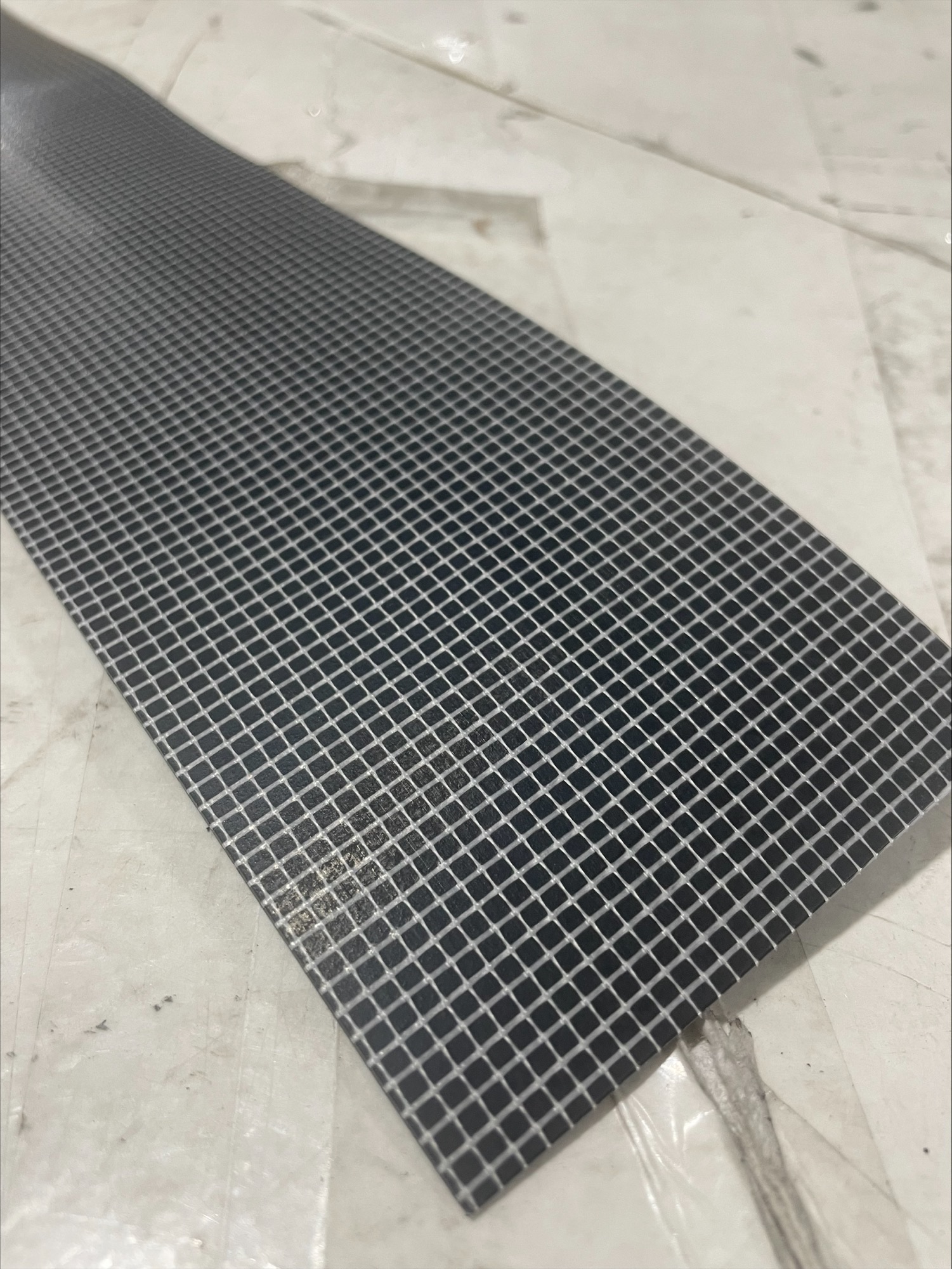
Both Sides of a Covalence WPCPIV Closure Strip

     Every single wrap around shrink sleeve must have a closure strip in order for there to be a proper installation.  The sole purpose of the closure strip is to hold the sleeve in the shape of a tube as it shrinks down the conform to the substrate.  The closure strip (WPCPIV) has absolutely no coating or corrosion prevention function.

     If a wrap around shrink sleeve were used and a WPCPIV closure strip was not used; as the sleeve began shrinking, it would simply fall off of the pipe onto the ground.  

     As you can see in the above picture, the checkered side is the high shear adhesive side.  That is the side that goes down onto the shrink sleeve and prevents the sleeve from pulling away.  The bottom black side is simply the outer PE jacket which acts as the vehicle for getting the adhesive in place.

     Typically purchased in 4" sections, the closure strip would be wide enough to match the width of whatever wrap around shrink sleeve you are installing.  In some cases of large OD pipe; closures as large as 6", 8" or even 12" could be used.  We can make any size you need!

Tuesday, March 19, 2024

What is Covalence WPCPIV

 What is Covalence WPCPIV Used For?

     WPCPIV is a Covalence part number (started as a Raychem part number of course).  Every single wrap around shrink sleeve will use a WPCPIV closure strip.  The purpose of the closure strip is simple:  it holds the sleeve in the shape of a tube during the shrink process.  Without a closure, the shrink sleeve that was wrapped around a pipe would slowly fall away from the pipe and eventually be dangling off of the pipe or laying in the dirt. Once the sleeve is fully installed and cooled however; the closure strip no longer serves any purpose.  There would really be no point in removing it; but after the installation the WPCPIV has no corrosion prevention responsibility or contribution.  

     You want the WPCPIV closure strip to be as wide (or slightly wider) than the shrink sleeve material you are working with.  Historically, standard shrink sleeve widths are:  11.25", 17.75", 23.50" and 34.25" (customs always available on request).  In terms of the other dimension, WPCPIV closure strips can be 3", 4", 6", 8" or any custom size requested.  

     Picture this:  a 25" long shrink sleeve is wrapped around a 6" pipe with a circumference of just under 21".  You start by putting one end of the sleeve on the pipe (that has been cleaned and preheated) and the sleeve is then wrapped all the way around the pipe and overlaps onto itself by at least 2" (leaving a slight "bag" or some slack in the sleeve.  The closure (if you're installing a two piece sleeve) would then be half on one side of the sleeve --- and half on the other.  The closure is then heated with a propane torch, causing the adhesive so get soft and aggressive.  The WPCP closure is then patted down (or rolled) to make sure that it has good contact with both side of the sleeve (so the sleeve can't slip off of the pipe).  A bit more heat is added to the closure and the smooth black of the closure will begin to show signs of the reinforced mesh material that is laminated within it.  Then you know the closure has been properly heated.  
    
WPCPIV
Here is the adhesive side of the WPCPIV closure strip.  You can also see the checkered pattern of the laminated reinforcement.  That reinforcement insures that the closure doesn't stretch during the shrink process.

WPCP
Here is a close up of the adhesive (clear) and the fiber mesh behind it.


/uni sleeve
Here is the smooth black backing of the WPCPIV closure.  This should be on the OUTSIDE (yes, I've seen people try to install them the wrong way).  


Thursday, February 11, 2016

Shrink Sleeve Closures

Closures - WPCPIV

     Any wrap around shrink sleeve requires a closure of some form.  What does the closure do?  It simply holds the sleeve in the shape of a tube -- in place -- around the pipe during the shrink process.  If you did not use a closure of some kind, your shrink sleeve would turn into a giant mess of PE and mastic in a pile on the ground underneath your pipeline!

     So what are closures?  First of all - we should say there are several different types.

Standard WPCPIV Closures:  These are the regular closures we use for most wrap around heat shrink sleeves.  They are thin and comprised of three layers.  Layer 1:  radiation crosslinked polyolefin backing.  Layer 2:  fiber mesh to imbue that PE with added strength.  Layer 3:  high shear adhesive designed to stick to the sleeve backing and prevent any slippage at all from occurring as the heat shrink sleeve begins to exert force on itself during the shrink process.

     Rail and Channel Closure: This is a physical closure.  One end of the sleeve has a PE toe sticking out.  This toe meets up with the toe on the opposite side - and then a stainless steel channel is slid into place to hold those toes together during the shrink process.  This method is more often used on high expansion electrical products.

     An actual Zipper:  some products like our Caseal and Flangeseal use an actual zipper; sewn into the backing; in order to hold that sleeve together during the shrink process.  A regular closure is then used -- but only to prevent the heat from the torch from adversely effecting that zipper.

     That more or less covers it.  If you are looking to buy rolls of material in order to cut the sleeves yourself - you absolutely must use closure strips as well or else you are very likely going to have some major field issues -and some major irritations in your future.