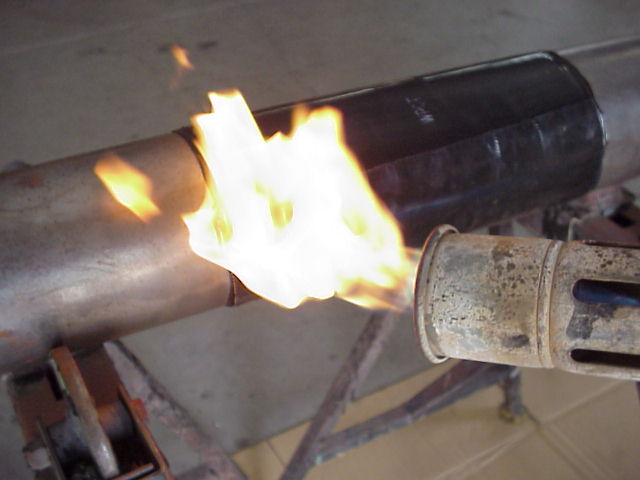
Heat Shrink Sleeve Inspection Concerns
NOTE: This is not a product I sell or represent.I was contacted this weekend by a customer located somewhere outside of the USA. They have been installing a heat shrink sleeve system purchased and manufactured in the far east. Having installed a number of shrink sleeves already, they are finding a number of different things to be highly concerned about. They asked my opinion: are their concerns about the heat shrink sleeve issues they are observing valid?
I will get into more detail, but the quick answer is: YES. This person I'm speaking with is very observant and quite smart. They are absolutely correct to be concerned about these issues.
I shared with them that most every specification that crosses my desk over the course of the last couple of years has a very strict direction in terms of heat shrink sleeve manufacturers: "No shrink sleeve manufactures from China, Korea or India will be accepted." This is not my recommendation - this is a policy that I see listed in specifications over and over. Why is it specified like that? My guess is that most companies are requiring manufacturers other than those countries because they have tried or evaluated shrink sleeve material from China/Korea/India in the past and they quite simply haven't found the products quality to be at an acceptable level yet.
That makes perfect sense to me. I have evaluated products from those countries a number of times over the years. They are always looking to break into the US market - and it is very common for me to be offered samples on just about a monthly basis. I always see the same things when I accept their offers: adhesives that don't flow or bond well -- and backing that is made from a low density PE and doesn't bring much to the table in the way of strength. That is a very bad combination! A shrink sleeve that doesn't stick well -- is not going to protect your pipeline!
So back to this particular case. This is a high temp line (80C) and upon inspection after installation - some red flags were raised:

Now, this is does indeed raise a lot of issues - and we are not going to be able to answer them here. First of all - it is possible this could be an installer issue. It could be that the PE jacket here wasn't properly cleaned and that what happened there was that dust or dirt was on that little piece of PE and as a result, the adhesive didn't bond to the PE. That is certainly possible. It could also be though that this particular adhesive simply isn't flowing very well - and isn't filling properly underneath the sleeve. If there are gaps here -- what is the step down area going to look like? What is the weld bead area going to look like? We can't know - but it could certainly be worth evaluating.
Of the 2/3 issues we will look at here - this one might be the most innocuous. We can't definitively say what is going on - we can't say with 100% confidence that the adhesive has failed here - but we can certainly say 'this is something we would like to look more deeply into'.
Onto the other issues here (I'll show two photos):


Here we have two photos / areas that are showing the same problem: hair line cracking of the adhesive. This is HIGHLY concerning. In the bottom picture, those cracks are what I would consider to be: significant. I know the top picture is more difficult to see - but those also are very concerning. My first guess is that these adhesive are just not flexible enough to be used as a pipe coating. If we see cracks here, where there has really been minimal stress on the pipe - I quite honestly can't imagine the sleeve offering any quality corrosion prevention after even a few weeks of normal and natural pipe movements. We can clearly see (in the cracks) the beginnings of a leak path. For all we can tell, the adhesive is also cracked underneath the back. Not good. Not good at all.
In recent years, there have been a number of shrink sleeve manufacturers pop up. It isn't difficult to find some cheap labor - and a chemist or two to teach about peroxide bonding. In addition, in some parts of the world, they try to reverse engineer different adhesives and mastics (this is not a simple task) and quite frankly, they think they copy them well...but they do not. They then sell a cheap and inexpensive product into different marketplaces around the world (focusing specifically on the Middle East, Africa and Eastern Europe) and they dump a bunch of zero quality pipeline coatings on these jobs.
They pitch that they will save you money --- but your pipe is not corrosion protected. They cost you money. They cost you lots of money. It may be a few years but you will have massive corrosion problems and when they are discovered, that Chinese shrink sleeve manufacturer will have changed their name, or gone out of business -- or it will turn out that you were actually dealing with a broker, not a manufacturer - and so the manufacturer is unwilling to stand behind their product because it was the brokers fault (these are all things that I've heard).
Raychem (now called Covalence / Seal for Life) - took decades, many PHD's, many chemists -- to perfect that design, creation and consistent manufacture of specialized adhesives and mastics. Those cannot be reverse engineered. They can not be copied over the course of a couple of years. Please do not support the pretenders -- please specify and use only proven products with long successful use histories.