Visit our website: www.jsicoatings.com
Call: (936) 321-3333
Email: steve@jsicoatings.com
Showing posts with label pipe bumpers. Show all posts

Wednesday, February 11, 2026

A BBS Bumpers Success Story on Polypropylene Coated Pipe


We recently had the opportunity to work on a bundled road bore project using our BBS system—bumpers designed specifically to prevent pipe-on-pipe abrasion during the pull-through, with particular focus on protecting the girth welds.

There was just one catch: the pipeline was polypropylene coated.

Anyone who works in the coatings world knows that polypropylene can be a challenge. It’s a fantastic coating in many respects, but when the task at hand requires bonding something to it, the difficulty level increases quickly. And in this case, we weren’t just asking the system to stick.

We were asking it to:

  • Bond reliably to polypropylene

  • Survive being dragged thousands of feet through a bore hole

  • Maintain position and integrity from entry to exit

That means the system had to deliver excellent shear strength, peel strength, penetration resistance, and abrasion resistance—all at the same time. That’s a big ask for any product.

Fortunately, the end user did something that almost never happens: they provided us with an actual sample of the polypropylene coating in advance. That allowed us to evaluate—firsthand—the bond our BBS system was making with their specific coating formulation.

To put that in perspective, roughly 95% of the orders we receive ship same day or next day. For a customer to give us a few weeks to slow down, test thoroughly, and validate performance in their environment? That’s a rare treat—and one we don’t take lightly.

After running the full gamut of testing, the results were clear. Our BBS system and this polypropylene coating were an excellent match. The bond performance met expectations across the board, giving everyone confidence heading into the installation.

And sure enough, the job went off without a hitch.

When the bundled pipe emerged from the exit hole, the bumpers were:

  • Perfectly intact

  • Undamaged

  • In the exact same position they started in

No surprises. No failures. Just solid performance from start to finish.

This project was a great reminder that while coatings like polypropylene can present real challenges, the right testing—and the right solution—make all the difference.

BBS is an excellent product. And when paired correctly, it delivers exactly what bundled road bore applications demand: protection, durability, and peace of mind.

Friday, January 23, 2026

Multi-Pipe Pull Throughs


Managing Multiple Pipelines in a Single Bore: Why Spacing Matters


Pulling multiple pipelines through the same bore hole introduces a unique set of challenges for any construction crew. Once those lines are in motion, the question becomes: how do you keep one pipeline from abrading another? How do you prevent collisions as the pipes shift, flex, and—at times—behave more like spaghetti noodles than rigid steel?

These concerns become even more critical at the girth welds. The weld profile naturally creates a high point on the pipe, making it especially vulnerable to damage if adjacent lines come into contact during installation or over the life of the pipeline.

That’s where our BBS (Bundled Bumper System) comes into play.

The BBS system creates a one-inch bumper around the pipeline, effectively spacing lines apart as they are pulled through the bore. While larger spacers can be manufactured, more than a decade of field experience has shown that a one-inch separation is more than sufficient for the vast majority of applications.

By maintaining consistent separation, BBS prevents pipelines from abrading, bumping, or damaging one another—both during installation and after the lines are in place. Just as importantly, once the pipelines reach their final resting position, the spacing created by BBS allows soil to settle naturally between the lines. This ensures your cathodic protection (CP) system has unobstructed access to 360 degrees of each pipeline, helping maintain long-term corrosion protection.

When multiple lines share a single bore, proper spacing isn’t just a nice-to-have—it’s essential. And with the right system in place, it’s one less thing your crew has to worry about.

Tuesday, November 4, 2025

Joint Specialists - Committed to Stocking Material

JSI - Largest Stocking Distributor for (some) Seal for Life products

For those who haven't had the opportunity to tour our production facility in The Woodlands, reach out! We'd love to show you around.

Our 20,000 square foot warehouse still has plenty of room! Our current stock levels in case you're curious how seriously we take our roll as a value adding Distributor / Light Manufacturer:


Currently in stock:

- 150 pallets of Covalence material (and packaging support)

- 143 pallets of Powercrete material (and packaging support)

- 50 pallets of BBS Bumpers for Bundled Road Bores

- 16 pallets of Raychem / Tyco Electronics WCSM material (for sealing low voltage splices and jacket repairs)

- 8 pallets of Stopaq material (soon to be more)


We aren't full yet either! Plenty of room left to take on more. Many thanks to our partner Seal for Life Industries who we've been working closely with for more than 30 years now!


Monday, February 3, 2025

Bumpers for Multi-Pipe Directional Drills

 Bumpers for Bundled Pipe Bores

pipe bumpers
bumpers for bundle drill

     Another successful bumper project is underway.  As we often do, we were there to train crews at job kickoff.  It's certainly in EVERYONE'S best interest that our products are properly installed.  Though the product is quite simple to install, best to make sure everyone is on the same page from the jump.

     Utilizing our newest iteration of bumper material - we are now utilizing a trapezoid shaped bumper in order to give a slightly easier ride over the rollers.  Though an upset in the pipe will never bring a fully smooth transition, this bumper shape certainly brings a dramatically improved trip over the rollers.  If you have a job and would like a demonstration or sample of the product, reach out and we will make that happen!

     Utilizing that specially formulated trapezoidal bumper material along with our system for making sure that bumper does not move anywhere during the pull through, we have the best system in the market to protect your pipeline.  
  
     Preventing pipe on pipe collision damage is job #1 for the BBS bumper system.  Keeping space between the lines when they have reached their final resting place so that CP current can access the lines is job #2.  Both equally important. 

     If you have questions, please don't hesitate to reach out.  We love talking about this product!  

Monday, January 13, 2025

BBS System Improvements for your Bumpers on Bundled Drills

Joint Specialists Announces Improved BBS Bore Bumper System for Enhanced Performance


Trapezoidal Bumper as part of the BBS System for Bundled Pipe 

    Joint Specialists, a leading provider of innovative solutions for the oil and gas industry, is pleased to announce a significant improvement to their BBS bundled bore bumper systems. After an extensive research and development effort, the company has replaced the 1"x2" rectangular bumper with a new and improved trapezoid shaped rubber. This enhancement will transform the BBS system into a more 'roller friendly' product, providing enhanced performance and efficiency.

    The decision to upgrade the BBS system was made after careful consideration of customer feedback and market demands. The rectangular bumper, while effective, was not as efficient in handling the movement of rollers as desired. With the new trapezoid shaped rubber, the BBS system will now be able to smoothly and effectively handle the movement of rollers, making it a more reliable and user-friendly product.

    According to the company's blog, the new trapezoid shaped rubber has undergone rigorous testing and has shown promising results. It has been designed to withstand extreme temperatures and harsh environments, making it suitable for a wide range of applications. The improved BBS system is now available for purchase and more information can be found on the company's website at http://blog.heatshrinksleeves.com/search?q=BBS.

   JSI is committed to providing innovative and high-quality solutions to their customers. The improved BBS system is a testament to their dedication to constantly improving and evolving their products to meet the ever-changing needs of the industry. The company is confident that this enhancement will greatly benefit their customers and contribute to the overall success of their operations.

    Joint Specialists is excited to introduce the new and improved BBS system to the market and looks forward to the positive impact it will have on their customers. With this upgrade, the company continues to solidify its position as a leader in the industry, providing cutting-edge solutions that drive efficiency and productivity.


Monday, May 15, 2023

Pipe Spacer for Bundled Road Bores


BBS - Bundled Bore System for Protecting Your Pipelines

Reach out for more info:  steve@jsicoatings.com

Bundled directional drilling applications present a unique challenge in the pipeline industry as different pipe sections can damage each other during installation. Joint Specialists, a leader in pipeline solutions, has developed a solution to address this problem. The Bore Bumper System (BBS) is a proven and reliable solution for preventing pipeline damage during bundled directional drilling applications.

The BBS system is primarily composed of two components - a specially formulated and designed rubber bumper material and a heat shrinkable vehicle. The rubber bumper material is carefully selected, evaluated, and proven to provide a cushion and space between the pipelines during installation. The heat shrinkable vehicle is a reliable component with a long history of use, ensuring that the bumper stays in place throughout the pulling process and beyond.

In the past, other solutions, such as rope with duct tape, have been used to prevent pipe collisions, but these solutions are not reliable. Some solutions are intricately complicated, with additional products on a pipeline that are designed to withstand the forces of road bore, introducing metal bands on the pipeline, which is a risky approach. In contrast, the BBS system is a proven and simple solution that only uses products specifically designed to withstand road bore forces. It offers abrasion resistance, penetration resistance, shear, and impact resistance values that are top of the line.

Each BBS kit includes two specially formulated bumpers, a suitable amount of S1301M Two Part Epoxy Primer, a high shear heat shrinkable sleeve, a high shear heat shrinkable leader strip, and duct tape to hold the bumpers in place until the sleeves have been installed. The spacing of BBS bumpers and sleeves is determined by the end user guidelines.

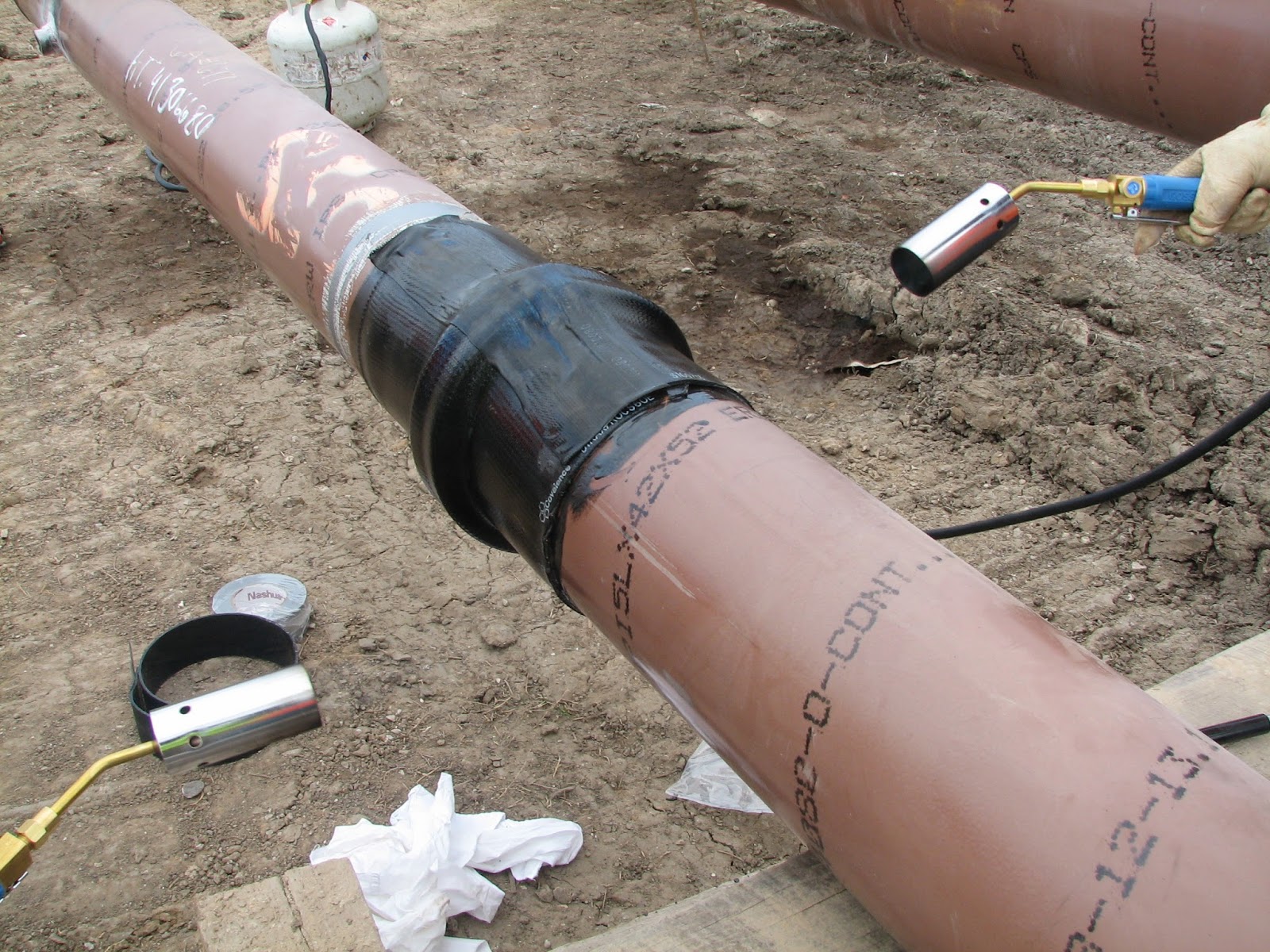
To install the BBS system, all pipe surfaces involved in the application must be free of all oils, dust, dirt, mud, or any other substance that would reduce or prevent a proper bond. The pipe surfaces should be preheated to a temperature between 140F and 160F, and the bumpers should be wrapped around the pipe quickly and secured in place using a small amount of duct tape. The S1301M Epoxy should be mixed and applied in a thin coat covering all parts of the pipe that will be in contact with the shrink sleeve. The wider shrink sleeve should be wrapped around the pipe quickly and centered on the bumpers. Finally, the closure strip should be secured using the propane torch and a gloved hand.

In conclusion, the Bore Bumper System is a proven solution to prevent pipeline damage during bundled directional drilling applications. Joint Specialists has developed a reliable and straightforward system that is designed to keep space between pipelines involved in a bundled directional drill. The BBS system is easy to install, using products that are specifically designed to withstand road bore forces, making it the best choice for anyone looking for a reliable solution to pipeline damage during bundled directional drilling applications.

Monday, February 7, 2022

Zip Ties to Hold Bumpers on a Bundled Directional Drill?

 Zip Ties to Hold Pipe Bumpers on a Road Bore?


     I've had an interesting week.  There is a pipeline project going on out there that is using zip ties as the primary method of keeping pipe bumpers on the pipeline.  In this particular case, two 12" pipelines are being dragged through the same bore hole at the same time.  A bumper is needed there for a variety of reasons, but most importantly:

  1. To prevent pipe on pipe damage during the pull through
  2. To keep space between the pipelines to allow room for the cathodic protection system to do its job (pipe cannot be resting on pipe)
     In this case, I've had phone calls from an inspector on the line and from a QA employee who works for the end user.  In both cases the question was the same:  Do you think it is going to work if we have our bumpers secured with zip ties?  (not coincidentally; both people asked that their identities remain confidential of course). 

     My first response:  "WHAT???"
     My second response:  "Are you serious?"
     My third response:  "No, I don't think that is going to work."

     Now, everyone who has experience with a directional drilling application understands that tremendous forces are going to be put on the pipe.  That is the reason that Powercrete DD is such a sought after product!  It has excellent abrasion resistance, penetration resistance, gouge resistance, etc.  When that pipe that is travelling under ground collides with rocks and roots; the Powercrete DD is tough enough to survive without a scratch.  

     When you're pulling muliple pipelines through the same hole; at the same time -- those forces are all magnified.  Those lines are bouncing around in that hole; and bouncing off of each other if a proper bumper system isn't used (see JSI's bumper system here).  Consider more than one very heavy section of pipe; consider the forces when that pipe 'bounces' off of a rock -- and anything used in that situation had better be tough.  

     Say you're pulling 24" OD pipe through a bundled bore (along with a 12" line).  That 24" OD pipe might way 100 plus pounds per foot.  If you have a bumper of some kind on that line every 20 feet - that means each bumper is responsible for 2000 pounds of weight!  Now add in the massive spikes in force when that line collides with a rock!  Consider that there might also be a 12" line in that hole!  There could me more than 1 extra line (the most we have seen is 11 lines in 1 hole!).

     Those are incredible weights.  

     How much weight can a zip tie hold?  Keep in mind; even industrial zip ties are at most 1/2" wide (often 1/3" or less).  In my research, I do find a few zip ties that claim to hold 250 pounds and many more that claim to be able to hold 175 pounds or less.  If that 2000 pound figure that I cite up above (the weight of 20 feet of larger diameter pipe) for a stationary pipe; how much weight do those zip ties need to contain when that line bounces off of a rock; bounces off of another pipe; bottoms out in the bore hole as the pipe turns to head to the surface, etc.  Could you trust that to say 4 zip ties?  Absolutely not!!

     Meanwhile JSI's Bore Bumper System is proven over the course of hundreds of bores representing many, many miles of bundled bores.  Our system utilizes a material with a tensile strength of greater than 2500 newtons.  A simple conversion indicates that can be in the neighborhood of more than 500 psi.  Our system on a 20" line would have ~90 square inches of material permanently bonded to that pipe surface.  

     These aren't even two system that can be compared.  More than likely the zip ties begin popping shortly after the bundle enters the earth.  Soon after the bumpers likely begin falling off.  Shortly after that, the pipe likely begins to collide with each resulting in damage to your factory applied coating.  And then finally, the pipe very likely reaches its permanent resting place; with two steel pipeline resting on one another.  As time goes by and wet/dry and hot/cold cycles reign for weeks, months and years; the very expensive factory applied coating you paid for is worn away and massive corrosion problems occur.  All because someone chose to trust a zip tie. 


Tuesday, August 24, 2021


 Bumper System for Bundled Road Bores (BBS)

     Another successful bundled road bore using JSI's patent pending BBS bumper system.  This time our product was used on a project up in the Northeast USA.  We completed training on the morning of job kick off (though rain required we train in a warehouse instead of out on the right of way).  As you'll see in the photos below, we are installing on some scrap pipe for training purposes only.


We lightly preheat the surface of the pipe to be certain it is above the dew point and to be certain we are efficiently using the epoxy bonding agent in a very thin layer.  Other than preheating and wiping the pipe coating surface clean so that there is no dust, oil, dirt, grease, etc -- we do NOT damage the factory applied coating in any way. 


The epoxy bonding agent is applied to the preheated pipe surface.  The epoxy bonding agent is applied in a very thin layer.  Microns thick rather than mils.  We want a thickness at which we see the solid color of the epoxy we are applying.  The epoxy should be everywhere that the system will be -- and beyond so that inspectors can verify proper application, even at a later date.

Specially formulated bumper is wrapped around the pipe and secured temporarily using tape.  The bumpers will have been cut at an angle so that they fit together properly; forming a round circular shape.

The main sleeve is then wrapped around that bumper (centered) and the closure is secured.  It is critically important that the sleeve is one that has been proven successful in road bore applications; otherwise you are likely to end up with a pile of material that has torn off the pipeline in your bore hole.  

Main sleeve is then shrunk; starting over the bumper and moving to either end.  The sleeve should always be shrunk circumferentially (around the pipe) in a manner that prevents any air entrapment.  The sleeve will conform very nicely to the bumper profile.

For pipelines 12" and larger we recommend utilizing two installers; one on each side of the pipe - working in tandem.  


Here we see the profile of the bumper showing nicely and properly.  This is looking like a very good installation.  Good job to the crew!


We now see that the leading edge sleeve has been applied to the left side of the system.  This offers extra protection to the front end of the system.  


In this installation, the leading edge strip is on the right side of the system.  Another great install by this crew.  BBS Installation Certification cards are on their way to you!  In addition, we are available 24/7 for teleconference, video conference or any possible trouble shooting that may arise.  


Monday, December 14, 2015

Pipe Bumpers (BBS or BBS/CCS)

Pipe Bumpers (BBS and BBS/CCS Bumper Systems)

     As the United States becomes more and more saturated with existing pipelines, and as securing right of ways becomes more and more difficult; it seems the industry is seeing surprising growth in the area of bundled directional drilling projects.  If you're unfamiliar with this technology, it is exactly the same as your standard road bore or directional drill; but you pull more than one pipeline through the bore hole at the same time.  We've been involved in projects where two lines were pulled through the same hole; and we've been involved with projects where as many as 11 pipelines per pulled through the bore hole at the same time!  Hard to believe?  Yes.  Incredible to see?  Absolutely (sorry, no photos were allowed on that job site).  One problem to tackle there:  how do you prevent the pipelines from damaging one another as they are pulled through the hole?  Also, how do you insure that you don't have pipe resting on pipe through out the life of the line?  The answer is fairly simple: BBS bumper systems. 


     Seems simple, right?  It is.  Kind of.  You see our bumpers are held in place by materials that are specifically designed to survive the enormous shear and peel forces that are associated with a road bore.  Picture a bumper wedged between three different pipelines being pulled through a mountain of mud.  That bumper is going to act like a sail - seeing tremendous forces.  That is why it is so important to use a 'road bore rated' product to hold that bumper in place.  How do we know ours works?  We've seen before and after photos after a thorough evaluation:  Pipe Bumper Case History

    It is important, when selecting a system, that you select a system where all components are approved for use by the manufacturer as road bore approved.  Some systems utilize components that are not road bore approved.  What happens to those bumpers when they are being dragged beneath a road, beneath the ship channel, or beneath a reservoir of some kind?  Nobody knows!  Does it make sense to use a system with components that the product manufacturer would say NO WAY!  You absolutely cannot use our product for that application and expect it to work!  No, it doesn't make any sense at all -- yet there are still people who use it.  I can't figure it out! 

     For help with your next bundled road bore project, give me a call.  Let's have a chat.  Let us help figure out how you're going to keep those pipelines from damaging one another so that you can spend your time and attention on one of the other hundreds of details you'll need to make decisions on.

Thursday, October 22, 2015

Bumpers for Multi-Pipe Directional Drills

Boring Multiple Pipelines at a Time in Same Hole


     As the ground in the USA continues to be ever more filled with our aging pipeline system, in some parts of the country, finding proper right of ways has become more and more difficult.  One way that some companies are choosing to get around this major problem, is to utilize directional drilling technology to lay pipelines without needing to disturb some existing lines.  In some cases, to make things even simpler, many companies are turning to bundled directional drilling applications to lay more than one pipe at a time into the same bore hole.  In cases like this, how can you prevent the different pipelines being dragged through the hole from colliding and damaging one another?  I'm glad you asked; the answer is the BBS - Bore Bumper System. 

     Used on everything from two pipeline bundles to eleven pipeline bundles (yes, we've actually seen this), our BBS bumper system has been used on everything from 4" pipe to 24" pipe.  The system itself historically has been used on pipelines up to 48" (but we've yet to see a bundle that incorporates a 48" line in it).  After numerous uses, the story is always the same; the BBS bumper system if fast and easy to install....and it works like a champ - preventing pipe collisions during the pull through AND during the bore staging.

     We've been fortunate in that we've had the opportunity to inspect this bumper system after it has traveled through the bore hole.  Did the bumper move?  No.  Did the bumper slide?  No.  Did the bumper disappear?  No.  Were there pipe collisions resulting in damage to the factory applied ARO?  No.  Every line came out of the hole exactly like it went into the hole (except for the mud of course). 
     So, if you're bidding a project that needs to include some bore bumpers - look no further - take a close look at our proven, fast and easy to install BBS system.  steve@jsicoatings.com

Monday, October 5, 2015

Prevent Damage on Bundled Pipe Bores

Bundled Directional Drilling Damage Prevention

Installed BBS - 2" wide / 1" tall bumpers to protect your pipeline

Daylight can be seen in the gap created by our BBS system on a 16" pipeline.
     Steel pipe is expensive.  Factory applied pipe coatings are expensive.  Moving coated pipe around the country is expensive.  Boring machinery and crews are incredibly expensive.  I know most end users are painfully aware of this already - but pipelines are assets with incredible value and incredible revenue streams.  Line replacements, line shut downs and major corrosion problems can be career ending propositions.  So with all of that, why aren't more end users and contracting taking the extra step to put bumpers on their bundled directional drills? Some are, but many still are not.

     Pulling a pipe bundle through a boring hole puts some pretty extreme forces on a pipe coating.  The bundle can see experience unexpected bumps and bruises along the way as well.  Picture for a moment a bundled directional drill consisting of a 20" line and two 12" lines.   Each of those lines is going to weigh hundreds of pounds per meter.  What happens when there is some kind of a collision underground caused by a hiccup in the pull; a rock underneath the bundle or a slip of some kind out in the staging area? 

    Beyond that, what about after the bundle is in place?  Do you want your pipelines resting directly on top and touching one another?  Isn't some space between lines a much better option for cathodic protection systems?  I think the answer to all of these questions is pretty clear. 

     Shoot me an email and I'll shoot you an electronic copy of our BBS literature.  It shows installation steps, technical details and before and after photos of our system.  The bumpers speak for themselves and I think you'll probably agree after looking over the photos (steve@jsicoatings.com)

Wednesday, May 27, 2015

Pipe Bumpers and Hydrostatic Testing

Hydrostatic Testing and Pipeline Bumpers

     Heard from a contractor recently about an upcoming directional drill bundle he is running.  His customer (the end user) had tasked him with finding a product to use as the spacing bumpers on his bore bundle in order to insure that the pipe didn't damage itself bumping into other lines in the bundle during the pull through process.  On a previous project, this end user had used some kind of a mechanical bumper and things had not gone well at all.

     The contractor 'installed' all of the mechanical bumpers (screwed / bolted them together an in place) and they looked fantastic.  The problem became apparent when they ran their hydrostatic testing though.  If you're not familiar with hydrostatic testing; here is a very simple definition copied straight from wikipedia:

"A hydrostatic test is a way in which pressure vessels such as pipelines, plumbing, gas cylinders, boilers and fuel tanks can be tested for strength and leaks."
     So picture this:  you've got your pipelines all strung up.  You've got your bore hole drilled.  You've got all of your screwed on / bolted on mechanical bumpers in place.  You've got all of your pipe welded and you've got all of your field joints coated.  One last step before beginning the pull through - hydrostatic testing.

     Fire up the test and you hear something crack.  You also think you see something fly through the air a ways down the line but you can't be sure.  You kill the pressure and go to inspect the line.  Right off you see what flew through the air -- a small piece of plastic that came from one of those mechanical bumpers!  Upon further inspection  you go down the line and see that an alarmingly high number of your spacers were cracked during the hydrostatic testing!  What now??

     Good news.  Our product does not have any issue with hydrostatic testing and our product can be installed quickly and easily at just about any stage of construction....even in a hurry to get a job back on schedule.  Our system utilizes a specially designed heat shrink product to hold the bumper in place.  Heat shrink has been used on field joint coatings for decades and...these sleeves have withstood hydrostatic testing with no issues over those decades. 

Friday, January 30, 2015

Pipeline Cluster Spacers

Cluster Spacers for Pipelines

     Multiple pipes being pulled through a bore at the same time (often called a bundled directional drill) require special preparation to be certain that there won't be significant pipe on pipe violence occurring during that pull.  In such a case, a system that serves to keep a safe distance between the assorted pipelines is highly recommended.  Sometimes that system is called a Cluster Spacer (though we call ours a bundled bore system:  BBS).

     Directional drilling is incredibly expensive.  Drilling a hole large enough to fit several different pipelines through at a time is even more-so.  It is pointless to spend all of that money on the bore itself and then allow the pipeline coating to be so damaged that you're creating problems for years to come.  You have to protect your investment.  That is where our cluster spacer system comes into play.

pipeline cluster spacer
Four Pipeline Cluster Bore
     Don't risk significant damage to your pipeline that will be involved in a bundled directional drill.  You have to have something to prevent the pipe from the other lines in the bundle.  That's where our BBS bundled bore bumper system comes in.  Get in touch with us for pricing and technical information.

Friday, March 28, 2014

Bundled Pipe Bumpers Case Study


Pipe Bumpers / Bundled Pipe Bumpers / Road Bore Bumpers / Bundled Directional Drill Spacers - CASE STUDY

“I’ve got a problem and you’re the only company I’ve heard of that might be able to help me.”  In all honesty, we get calls like that pretty often!  It is always great when a customer has a difficult problem and we can offer a fairly simple solution.
In this case, the customer had a bundled directional drilling project in Texas.  Pipe was already being strung up, but they didn’t know how they were going to prevent pipe collisions from causing a bunch of damage during the pull through.  To make matters even more complicated, they were pulling four pipelines at once:  16”, 16”, 12” and 10”.  The customer needed a solution…and he needed it fast. 
After several phone conversations, several emails and a face to face meeting, our customer was sold on the BBS system.  Material was going to be needed in about a week.  We were able to call in some favors with some of our suppliers; call in some extra labor for the manufacturing and hit the ground running the very next day.  Problem solved! 
Like any pipeline project, there were surprises along the way.  Fortunately, there was a great crew in place for this project we had an excellent, quality focused contractor.  We had an inspector who combed through every detail with a fine toothed comb.  We had an active and involved end user.  We had a veteran road bore crew.  And of course, we had us – Joint Specialists – with decades and decades of experience with pipeline construction materials. 


bundled pipe bumper
The four pipes were strung up side by side and marks were made where the bumpers were to be installed.  The pipe is then preheated to 140F and the bumpers are put in place. 
The two part epoxy is mixed and applied to the warm pipe
 

The heat shrink that acts as the main bumper anchor is shrunk in place.
Pipe Bumpers 
Altogether, each bumper installation took 3-5 minutes.  Once all of the BBS systems were installed, the pipe was bundled up and ready to be dragged through the mud.  This is where we ran into our biggest obstacle.  Just about 400 feet into the hole…the mechanism that grabs the pipe to pull it snapped.  We were told this almost never happens. 


raod bore
Here was the culprit:  the broken piece which caused the pipe and BBS system to travel an extra 800 feet underground (400 of it in the 'wrong” direction!)
As a result, the pipe bundle that had gone 400 feet into the hole….now had to come 400 feet back out of the hole in the opposite direction.  In addition, backing the pipe out was going to be a trickier proposition as it would be done with side booms. 
Wow, this was going to be quite a test for the BBS system.  400 feet into the hole.  400 feet backwards out of the hole.  Then 1700 feet back in and through the hole.  Beyond all of that though, we were going to get a golden opportunity.  Most of the time, a pipeline enters a bore hole and is never seen again.  Here we were going to get to inspect our system first hand after a 400 feet round trip journey into the Earth!  Is our system really as good as we believe it is?  Let’s find out!
The inspectors and end user representatives were excited about this rare opportunity as well.  They were going to get to closely inspect a few dozen BBS systems.  Would any be missing? Were any bumpers left behind in the mud?  Has the pipe been crashing into the other lines, or not?  Every BBS system looked the same.  All perfect.  All exactly as they’d looked pre-bore (well except for the caked on mud!).  Down the line the inspectors went; running their fingers along each side of the bumper to make sure it was still in place, still standing and still functioning.  We had a 100% success rate.
 
 
directional drill coating

shrink sleeve for boring

directional drilling sleeve

shrink sleeve after directional drill


protecting pipe during bundled road bore


So there you have it.  Does our BBS system work?  Absolutely.  Do you have someone else presenting some kind of solution that they ‘say’ works? If so, please ask them to prove it with documented photographic evidence!  I’m confident that no one else can!


Thursday, March 20, 2014

Pipe Bumper Doughnut


Bore Bumper System (BBS)

pipe doughnut
A JSI BBS installed on a 16" OD pipeline.
 
  Bundled Directional Bores

Directional drilling applications are one of the most difficult for a pipe coating to withstand.  With a bundled directional drill, the coating is challenged even more. 

Factory applied coatings are generally not designed to withstand the forces of a directional pull AND the tremendous impact caused by two heavy steel pipelines banging into one another.
Add in the fact that these sections of pipe will literally never be seen again and it quickly becomes clear that a reliable, proven bumper system is an absolute must if you want your pipeline properly coated and protected.


bundled directional drill
Here you see the BBS system installed on a 16" pipe fully supporting the weight of a 16" pipe and preventing pipe collisions
  Proven Bumper System

Incorporating a specially designed and formulated bumper/doughnut with a heat shrinkable holder proven to withstand the forces involved in a directional drill; the Joint Specialists system is superior to every other bumper out there.

No more rope bumpers.  No more steel banding next to your pipe.  No more polyurethane pours.  No more time consuming, unrepeatable installs. 
Your pipe is too important to risk letting it damage itself during a bundled road bore.  Install the best bumper system today so you can avoid major coating problems tomorrow.

 Prior to the bore hole, the pipe was suspended in this case to give it a good angle into the hole.


A rare sight indeeed.  Here is the BBS system AFTER the bore.  Bumper still in place. Sleeve unscathed.  Pipe protected.  The profile of the bumper is unchanged.  Another SUCCESS for the BBS bumper system.