Visit our website: www.jsicoatings.com
Call: (936) 321-3333
Email: steve@jsicoatings.com
Showing posts with label pipe bumper. Show all posts

Monday, February 16, 2026

Don’t Leave Your Bundled Bore Bumper System to Chance


Bundled directional drills are complex. They’re expensive. And they carry long-term consequences if something goes wrong.  So here’s a simple Public Service Announcement:

If your company does not have a thoughtfully written specification for bumpers on bundled bores, you are taking a serious risk with your pipeline.

When multiple 20" and 30" pipelines are bundled together and dragged thousands of feet through a bore, pipe-on-pipe contact isn’t a possibility — it’s a certainty. The real question is whether you’ve engineered protection into the project or left it up to chance.

Our BBS (Bundled Bumper System) was designed specifically to address these risks. It isn’t improvised. It isn’t pieced together on-site. It’s engineered for the application.

Here’s what that means:

  • Two-part epoxy bonding agent applied directly to the factory-applied coating — with no abrasion required

  • Bumper material backed by decades of bore experience

  • Leader strip protection on the front end of the bundle

  • A proven durometer rating engineered to handle the load

Most importantly:

The system is guaranteed to stay in place
The system is guaranteed to maintain the spacing you specify

Spacing isn’t cosmetic. It’s protection. Lose spacing, and you lose coating integrity. Lose coating integrity, and corrosion becomes part of your future maintenance plan.


What Happens Without a Specification?

Let’s talk about what I’ve actually seen, including as recently as this morning.

If you don’t clearly write a bumper specification into the project, the decision doesn’t disappear. It simply shifts downstream.

And when cost pressure takes over, here’s what that “system” often becomes:

  • A 1-inch rope

  • Wrapped with a couple laps of cold-applied tape

  • The kind with mesh backing and soft mastic

On a multi-million-dollar pipeline project.

Heavy 20" and 30" coated steel being dragged through the ground — relying on about $0.50 worth of rope and $2 worth of tape.

I’m confident even the tape manufacturer would tell you:
That is not a bundled bore solution.

Improvised bumper systems don’t usually fail immediately in a dramatic way.

They fail gradually.

  • Tape shifts and/or rolls

  • Rope slides or is pulled off

  • Spacing disappears

  • Coatings abrade

  • Problems begin

And now you’re living with coating damage that will follow the asset for decades.

That’s not a small oversight. That’s a lifecycle decision.


Write the Specification. Control the Outcome.

Bundled bores are the place to clearly define:

  • Bumper material

  • Durometer requirements

  • Bonding method

  • Spacing requirements

Because when you leave it unspecified, you’re not saving money.

You’re gambling with a buried asset that you can’t easily inspect or repair.

And that’s not going to help anyone sleep at night.

Monday, February 2, 2026

Pipe Bundle Bumpers: Use a Bumper System or You're Using Your Welds


A Critical Risk in Bundled Directional Drills (That’s Easy to Overlook)


I was reviewing a bundled directional drill specification this morning and ran across an interesting wrinkle — one that’s easy to overlook when talking about bundled road bores and spacer systems like our BBS Bumper System.

It comes down to this: girth welds are especially vulnerable to pipe-on-pipe damage.

Think about what’s happening inside a bundled bore. Each pipeline has raised girth welds, and those welds are typically protected by a field-applied coating. Unless a proper spacer or bumper system is used, those coated welds are rubbing directly against adjacent pipelines during installation — and potentially for the life of the line.

Field joints are already the most “at-risk” section of any pipeline. Coating thickness can vary, surface prep isn’t always perfect, and real-world field application rarely matches lab conditions. Add continuous contact and movement against another pipe, and you’ve just increased the likelihood of damage at the exact point you can least afford it.

Now layer in the reality of a bundled pipe bore.

If your pipelines aren’t riding on a bumper or spacer system, chances are they’re riding on something else — very likely a field joint. And beneath that field joint? A girth weld.

Let that sink in for a moment.

You may think your pipes are simply resting against each other, but in practice, you could be concentrating load, abrasion, and movement directly on a raised weld profile with a field-applied coating. Over time, that’s a recipe for coating damage and potential corrosion issues down the road.

This is exactly why spacer systems matter — and why they need to be designed with bundled installations in mind. A properly engineered bumper system like BBS keeps pipelines separated, transfers load away from girth welds, and protects the most vulnerable sections of the pipe during installation and service.

Because when you really visualize what’s happening inside that bore, it’s honestly a little scary to think about what’s riding on what.

And it’s far better to address that risk up front than to discover it later.

Wednesday, November 5, 2025

Multi Pipe Bundled Road Bores


The Rise of Multi-Pipe Bundled Road Bores — and How BBS Is Solving the Challenges


Another successful BBS project is in the books — and with it, another reminder of just how far bundled road bores have come. When we first started hearing about multi-pipe bundled bores over a decade ago, the concept was still relatively new and untested. Today, they’re becoming the norm rather than the exception.

BBS was created in 2014 with one clear mission: to make multi-line bundled bores safer, more reliable, and more efficient. Since then, our team has been directly involved in projects ranging from simple two-line bundles all the way to massive eleven-line bundles — an engineering feat that still amazes us every time we see it pulled through successfully.


The Challenge of Bundled Bores

Bundled road bores present a fascinating engineering challenge. When multiple pipelines are pulled through a bore hole together, a few key questions immediately come up:

  • How do you prevent the lines from abrading or damaging one another during the pull?

  • Once installed, how do you ensure each line is properly separated to allow for effective cathodic protection?

  • How can you verify that everything remains in its designed position throughout the bore and installation process?

Without a reliable spacer or separation system, bundled bores can result in significant risks — coating damage, interference with CP systems, and even long-term maintenance issues once the lines are in service.


A Decade of Proven Performance

Our BBS system was designed to solve these exact challenges — and it’s been doing just that for more than ten years. With over 100,000 successful installations across more than a hundred projects, the performance history speaks for itself.

The BBS design ensures consistent separation, protection, and alignment through the entire bore process. The result? When that pipe bundle emerges from the other side of the borehole, the lead bumpers are right where they were installed — perfectly intact and doing their job (even if they’re covered in a little mud).


From Concept to Completion — We’re With You All the Way

Our involvement doesn’t start when the bundle is pulled — it starts much earlier. We partner with engineers, contractors, and owners from the very beginning:

  • Engineering and specification development

  • Bid-stage support and design review

  • Pre-project and on-site training

  • Kick-off and installation guidance

  • Field support and inspection at pull-through

We take pride in being there every step of the way, from design to execution, ensuring your bundled bore project performs exactly as planned.


Looking Ahead

As multi-pipe bundled road bores continue to increase in frequency and complexity, the need for proven separation and support systems becomes even more critical. The lessons learned from a decade of BBS installations have positioned us to support the next generation of pipeline infrastructure — with smarter designs, faster installation methods, and even greater reliability.

If your next project involves a multi-line bundled bore, we’d love to share what we’ve learned and help you achieve a flawless installation.

Monday, March 31, 2025

BBS and BBS/CCS Bumper for Bundled Road Bores

 BBS and BBS/CCS Bumper for Bundled Road Bores


    JSI's BBS system has reached its 10th year of existence!  That is 10 years of protecting lines that will be a part of a bundled directional drill.  10 years of supporting your CP systems to keep space for the current to reach your pipeline 360 degrees around your line.  

    BBS and BBS/CCS are simple to install, requiring no special tools or training.  All that is really needed is a propane torch with a broad bushy flame and a means to wipe dust and dirt off of the pipeline prior to installation.  

    The BBS includes as its line item:
  • suitable durometer bumper material pre-cut to length
  • main sleeve to hold bumper in place
  • three inch wide sleeve for added front end protection
  • two part epoxy bonding agent
     Give us a call today to discuss your project!  936/321-3333

Tuesday, June 25, 2024

Bumper for Bundled HDD Application Guideline

Install Instructions for BBS HDD Bundle Bumpers

    Bundled directional drilling applications present a unique challenge in the pipeline world.  Something must be done to prevent the different pipe sections from damaging one another.

    The BBS System is primarily comprised of two general component groups:

1.        A specially formulated and designed rubber bumper material that has been carefully selected, evaluated and proven to do what it is supposed to do.

2.        A heat shrinkable vehicle with a long use history, proven to survive directional drilling applications with ease, used to hold the bumper in place throughout the pulling process (and beyond). 

  In my experience, factory applied pipeline coatings receive an alarming amount of damage being moved around the pipe coating yard, loaded onto trucks, transported to who knows where, and unloaded at a job site.  Imagine the additional damage that a pipeline will receive when it is being dragged through a hole in the ground interacting with other pipelines at the exact same time. 

  The scariest thing is that these pipelines that are involved in directional drilling applications are never going to be seen again.  If they are damaged, then the only option is to hope that the cathodic protection will properly protect any holidays.  That is complicated as well though!  Because now you’ll have multiple other pipelines potentially surrounding a damaged or even a bare section of pipe!  

  In the world of bundled pipeline directional drilling, there are a number of things that have been used.  Some are as simple as rope with duct tape wrapped around it.  I can’t imagine anyone truly believes that system is going to prevent pipe collisions.  Other systems are intricately complicated, but still bad.  Picture a piece of rope with a basic, drop in a ditch shrink sleeve on it, now put on some metal banding to hold that shrink sleeve in place.  Then put another shrink sleeve on top of that metal banding.  Crazy, because you’ve put products on a pipeline that are designed to withstand the forces of road bore AND you’ve introduced a metal band on your pipeline. 

  Our system has been proven (going in and coming out) and uses only products that are specifically designed to withstand road bore forces.  With abrasion resistance, penetration resistance, shear and impact resistance values that are top of the line, you will be able to rest easy knowing that you’ve done all you can do to get an undamaged pipeline in place prior to it going into service.  


All pipe surfaces to be involved in this application must be free of all oils, dust, dirt, mud or any other substance that would reduce or prevent a proper bond.
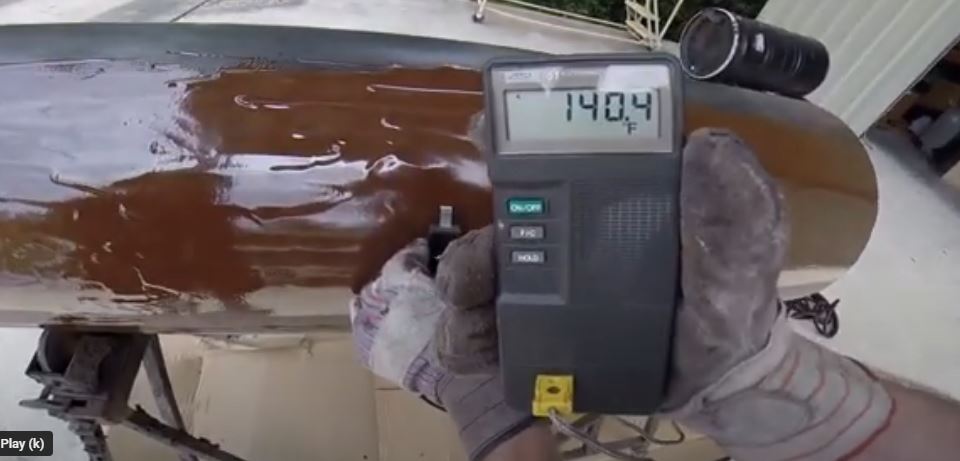
Using a propane torch, preheat all pipe surfaces to a temperature between 140F and 160F.  The primary reason for this is that the warm pipe surface allows the efficient use of the epoxy.  A cold pipe will use much more epoxy than is really necessary and will lead to an epoxy shortage as the job proceeds.

After the pipe has been preheated; quickly wrap the appropriately sized bumpers around the pipe right next to one another.  Secure them in place using a small amount of duct tape (included in the box). 

Mix and apply the S1301M Epoxy (quickly before the pipe cools down).  Everything you need is included in this kit:  Part A, Part B, Mixing Stick, Applicator Pad and latex gloves if necessary.  Apply the epoxy in a thin coat covering all parts of the pipe that will be in contact with the shrink sleeve.  It is not necessary to have epoxy between the bumper and the pipe.


Wrap the main (wider) shrink sleeve around the pipe (quickly, before the epoxy has cured) and center it on the bumpers.  Secure the closure strip using the propane torch and a gloved hand.  This will form the sleeve into the shape of a tube and hold it in the shape of a tube during the shrink process.  Note: the sleeve will wrap around the bumper AND overlap onto itself by at least a few inches.


Using the propane torch, begin shrink the sleeve.  The torch should be at  a setting that provides a broad, bushy, yellow flame.  Begin by shrink the sleeve directly on top of the bumpers.  You will begin to see the profile of the bumper showing through.

Next, install the 3” wide leading edge strip.  This will be positioned on the ‘front’ end of the shrink sleeve you’ve just installed.  When centered over that edge; it should be half on the just installed (still hot) shrink sleeve – and half on the still not fully cured S1301M epoxy that you applied previously.  Secure the closure and shrink the sleeve just as you did with the larger sleeve.

As necessary, using the silicone roller; roll the leading edge strip that you’ve just installed and the overlap area of both sleeves.  If you experienced any air entrapment during installation, use the roller to push that out as well.


Friday, March 22, 2024

HDD Bundle Bumpers

 Bumpers for HDD Bundles

     As JSI's BBS system for HDD Bundles is entering its 10th year of regular use, I think the jury has returned to the court room:  these things work.  

hdd bundle
As a point of reference, this is a 16" line resting on a 12" line.  Bearing the full weight of that 16" line and we can still clearly see the space being held between the lines.

      As a quick overview - an HDD Bundle is a situation in which more than one pipeline is pulled through the same bore hole (together at the same time).  In our time as leaders and innovators in this sector; we've been involved with TWO lines being pulled together; with ELEVEN lines being pulled together (wow that one was wild!) and many other configurations in between.

     Our BBS bumpers have been installed on everything from 2.375" pipe up to 36" pipe.  We can certainly go larger than 36" as well; but haven't had an opportunity to do so just yet. 

     You may be wondering:  why are bumpers needed on an HDD bundle?  There are two obvious reasons and both are equally important - for the sake of simplicity let's picture the 11 line bundle that we were involved with:
  1. During the pull through, you absolutely want to be certain your pipelines are not going to damage one another.  Picture multiple lines being pulled through the bore hole and one of them hits a rock; a root; a hard pocket of clay, etc -- and that one line 'bounces' and collides with the other line.  Even though pipe coatings are very tough, a 16" line bouncing and slamming into a 6" line is very likely to cause some damage to one or both of those lines.  Beyond that, picture 11 lines all resting on one another travelling through a 5000 foot bore hole.  Imagine those 11 lines vibrating against one another.  That would be a lot of abrasion happening for quite a long time (since the pipe is pulled through so slowly).  How much abrasion force would be put on those lines?  I don't know.  How much pipe on pipe vibration are the pipe coatings you selected able to withstand?  I don't know.  The best plan is to be certain your pipe will not be colliding or resting on one another through the pull through process.  That is where our BBS comes in.
  2. Equally important, when the lines reach their final destination....where they will spend their next 40+ years doing their job; you need to be certain that your cathodic protection system can reach all areas of your pipelines.  Picture that 11 line pull through that we were involved with (though the same logic applies to a 2 line pull through).  11 lines all sitting in the ground in a jumbled mess; touching each other and a huge pipe pile.  In cases where two or more lines are touching one another (in their final resting place) there is no room for soil and water to fill the voids around the lines and create a path for CP current to get through where needed.  Your own lines are obstructing the CP -- effectively giving you zero CP coverage in some areas.  That is a problem.  
     HDD bundles are excellent solutions that bring cost savings and bring options in highly congested pipeline areas.  But, you need a plan to help you avoid pipe on pipe damage and to make certain you aren't handicapping your CP system from the get go.  We can help you with that.

If you have questions - reach out!  steve@jsicoatings.com    936/321-3333

Tuesday, February 20, 2024

BBS Bumper for Bundled Bores - Included Components

 BBS Bumpers for Pipe Bundles - What is Included?

     Sometimes called Multi-Pipe Pullbacks; bundled road bores occur when more than one pipe is pulled through a bore hole.  It is a new tweak on a long time technology; the only difference is:  the bore hole is large enough to fit more than one pipeline.  In those cases, two things have to be considered:

  1.   How do we make sure they pipelines don't damage one another during the pull through?  Pipes do jolt at times as they encounter rock, roots, etc.  You certainly don't want those lines that you are never going to see again experiencing damage to their corrosion coatings!
  2.   How do we make sure we don't have pipelines resting upon one another?  We've supplied bumpers on bundles with as many as 11 pipelines involved.  Imagine 11 pipeline all resting on one another (picture a handful of uncooked spaghetti).  How is CP going to get to the line that is stuck in the middle of that bundle surrounded by a literal pipe wall keeping soil, water and current away from the line?  How about the "inside" sides of those pipes that are making up the "wall"?  You need to make sure there is space between those pipelines so that soil can ultimately fill those areas; creating a path for the CP. 
If you're curious - you can see a case study HERE.

     Now with nearly one hundred thousand bumpers installed and pulled through bore holes; we've yet to hear of a single bumper failure.  Yet to hear of a single bumper that disappeared during transit (the bumpers on the leading edge of the bundle always show up on the other end of the bore).   We've got a proven product, using our specially formulated bumper material --- and our proven system for making certain the bumper stays in place.  Many other folks have used this product successfully; so you can be confident you aren't taking any chances at all.

     So what comes in the system? See below:

rubber pipe bumper
Our specially formulated bumper material.  We are also working on new shapes to offer some advantages in the field.  Hopefully those evaluations will be completed in the months to come!


epoxy bonding agent
The epoxy bonding agent that gives fantastic shear and peel resistance to the bumper holding system.


BBS/CCS
The main component that holds the bumper in place with nowhere to go.  Tens of thousands installed with no reported failures.


pipe Rubber
Finally, the leading edge strip.  Probably not needed in all honesty, but this, installed on the leading edge of the system gives even more protection against some kind of peel back.


Monday, May 29, 2023

Pipeline Bumpers for Road Bore Bundle

Pipeline Bumpers for Road Bore Bundle


 When it comes to road bores, there are various types of bumpers or casing spacers that can be used to provide support and protection to the bundled cables or conduits during the boring process. Here are a few commonly used options:

  1. Casing Spacers: Casing spacers are designed to maintain the separation between carrier pipes or conduits during road bores. They are typically made of high-density polyethylene (HDPE) and feature ribs or dividers that hold the bundled cables or conduits in place within the casing. Casing spacers help prevent damage and ensure proper positioning of the pipes or conduits.

  2. Bore Spacers: Bore spacers are similar to casing spacers but are specifically designed for road bores. They are typically made of non-conductive materials, such as HDPE, and are used to maintain the separation and alignment of the bundled cables or conduits within the bore hole.

  3. Casing End Seals: Casing end seals are used to provide a watertight and secure seal at the ends of the casing or conduit. They help prevent the ingress of water, dirt, and other contaminants into the casing during the road bore.

  4. Duct Sliders: Duct sliders are often used in road bores to facilitate the installation of bundled cables or conduits into the casing. They are typically made of low-friction materials, such as plastic or nylon, and are placed at the entrance of the casing to ease the movement of the cables or conduits as they are pushed through the bore.

It's important to note that the specific type of bumper or casing spacer used for road bores may vary depending on the project requirements, local regulations, and the size and configuration of the bundled cables or conduits. It's recommended to consult with industry experts or suppliers who specialize in underground construction materials to ensure you select the appropriate bumpers for your specific application.

Friday, May 19, 2023

Bundled Pipe Bumpers: A Comprehensive Case Study

 Bundled Pipe Bumpers: A Comprehensive Case Study

Frequently, we receive calls from customers seeking assistance with challenging problems, and it is always gratifying to offer them simple and effective solutions. In this particular case study, a customer approached us with a bundled directional drilling project in Texas. Although the pipes had already been strung up, they were concerned about potential pipe collisions during the pull-through process. Complicating matters further, they were pulling four pipelines simultaneously, measuring 16", 16", 12", and 10" in diameter. The customer needed a swift and reliable solution. After multiple discussions, emails, and an in-person meeting, the customer was convinced that our BBS system was the answer. With the urgency of the situation in mind, we promptly coordinated with suppliers, mobilized additional labor, and commenced manufacturing to ensure the timely delivery of the required materials. Thus, the problem was successfully resolved.

Collaborative Efforts

Like any pipeline project, unexpected challenges emerged along the way. Fortunately, this project boasted an exceptional crew, consisting of a quality-focused contractor, a meticulous inspector scrutinizing every detail, an engaged end user, and a seasoned road bore team. Moreover, our company, Joint Specialists, contributed decades of experience in pipeline construction materials, further strengthening the collaborative approach.

Bundled Pipe Bumper Installation Process

The four pipes were aligned side by side, and markings were made to indicate the precise locations for bumper installation. Preheating the pipes to 140°F, we carefully placed the bumpers in their designated spots. Next, a two-part epoxy was mixed and applied to the warmed pipe surface. Finally, the heat shrink, which serves as the primary anchor for the bumpers, was carefully shrunk in place. Overall, each bumper installation required a mere 3-5 minutes. Once all the BBS systems were installed, the pipes were bundled and ready for the subsequent pulling operation.

Unforeseen Obstacles

However, during the initial 400-foot segment of the pull-through, the pipe-grabbing mechanism unexpectedly snapped. Although such incidents were rare, it presented a significant challenge. Consequently, the pipe bundle that had reached 400 feet underground needed to be extracted in the opposite direction, necessitating a complex maneuver using side booms. This unexpected turn of events provided an exceptional opportunity to test the resilience of our BBS system. Notably, the subsequent operations involved pulling the pipe back 400 feet, then pushing it 1,700 feet back through the hole. Furthermore, this situation offered a unique chance to inspect our system after its 400-foot round trip into the depths of the Earth. The question lingered: would our system prove as effective as we believed? The ensuing inspection would yield the answer.

Thorough Inspection and Evaluation

The inspectors and representatives from the end user's team shared our excitement about this rare opportunity to closely examine several dozen BBS systems. The inspection aimed to determine if any bumpers were missing, whether any had been left behind in the mud, and whether any collisions had occurred among the pipes. Despite the layers of mud obscuring the bumpers, the inspectors meticulously examined each BBS system. Running their fingers along each side of the bumper, they ensured its presence, stability, and functionality. Remarkably, we achieved a 100% success rate in this evaluation.

Conclusion

In conclusion, the BBS system demonstrated its efficacy without a doubt. Its reliable performance and ability to prevent pipe collisions were reaffirmed through this case study. We confidently invite anyone claiming to possess alternative solutions to provide documented photographic evidence supporting their claims. Based on our extensive experience and the results of this study, we firmly believe that no other system can rival the effectiveness and reliability of our BBS system.

Thursday, June 11, 2015

Bumper for Bundle Bore Pipe Sizes

Bore Spacer Use History

     Our bumper spacers that are used to prevent lines from colliding with and damaging one another in bundled road bore applications have been successfully used on many projects now.  Simple to install and proven repeatedly to be reliable (with some before and after photos that can be found on this article).  In that light, I am finding that a couple of questions are asked often.  These two questions are:  what pipe sizes have used these bumpers....and how many have been installed?  I'll answer the second question first.

     So how many of our bumpers have been installed?  The simplest answer is:  thousands.  We've seen thousands of our bumpers installed successfully.  Those protected pipelines on many miles of bundled road bores.  Beyond all of that, we've heard repeatedly about the simplicity of the installation of the system and advantages over some of the other options out there.  I think I described in detail here recently how our bumpers will have no issue with hydrostatic testing (which I was told caused some of the other bumper systems to fail before the bundle ever saw the bore hole). 

     On what sizes lines have our bumpers been used?  At this moment, we've seen our bumpers installed on every pipe size between 3.5" and 20".  We've seen everything from two pipeline bundles to eleven pipeline bundles.  Beyond that though, our evaluation of both the specially formulated bumper material and our knowledge and experience of the system we use to hold the bumpers in place; tells us that this system will work on any sized line.  Our system has been used in slightly different application on lines up to forty eight inch with no issues (actually in those cases our system was used an actual pipeline coating in order to prevent corrosion for twenty plus years; so simply "surviving the bore process without losing track of the bumper" is a pretty small request when making a comparison. 


Monday, May 18, 2015

Two Inch Bumpers for Bundled Road Bore

2 Inch Bumper System for Bundled Directional Drill


    If you've browsed this blog before, you've undoubtedly seen that we have numerous successful cases of our 1" Bumper System being used.  From time to time, what we've heard from end users and engineers is that they love our 1" system, but they would love a 2" system even more.  It took a little development time and it took a few different systems that were ultimately ruled out during our evaluation process, but we are now comfortable that we have come up with a 2" bumper system that will offer the same great performance as our proven 1" system has. 

bundled pipe bumper
3.5" Pipe and a 4" wide bumper that is 2" tall at its highest.

pipe donut
In this case, pipe would enter the bore offscreen to the right.

pipe bundle spacer
This bumper has an OD of 5.5" and is locked in place on the 3.5" pipeline.
     This material has been used previously and successfully held a 1" bumper in place.  For this system, we have created a star stepped bumper which will ensure shear and stress forced for this 2" bumper will be very similar to those experienced and survived on the 1" bumpers in the past.  To be on the safe side, we have increased the bond area of the sleeve to offer more square inches of bond, which will improve shear resistance even beyond what was needed for the 1" bumpers. 

     This is a great system.  With questions, or to schedule a demonstration, contact us today (steve@jsicoatings.com / 936/321-3333)

Wednesday, April 29, 2015

Pipeline Bumpers

Pipeline Spacer Bumpers

     As you've likely seen elsewhere within this website, our BBS Bumper System (used on bundled road bore projects) has seen great success.  As always seems to be the case, with success comes customization.  Since we pride ourselves on our ingenuity and our ability to engineer solutions to customer needs, we always welcome customizing our products to specific projects.  In this particular case, we've been asked to modify our current BBS system to incorporate a 2" tall bumper rather than the traditionally used 1" tall bumper.  The answer (due to the specific pipe sizes associated with this pipe bundle) is YES.

     We utilize two different systems for our bumper system.  These two systems are:

- BBS - a very thick, tough and rugged bumper containment system with a standard shrink ratio (~25%).  This is our most commonly sold bumper system installed on pipelines 8" OD and larger. 

- BBS/CCS - a slightly less thick, tough and rugged bumper containment system with a high expansion backing (~66%).  This is our most commonly sold bumper system on pipe sizes: 6", 4", 3" and 2". 

    Both of these systems have been utilized and to this point, all has been installed with a 1" tall bumper (by 2" wide).  Those time may be changing, however.


bundled pipe bumper
Our specially formulated bumper in a 1" thickness.


     For those customers who are interest in using a 2" tall bumper instead of a 1" tall bumper, we have good news.  It can be done.

     With our BBS system, the limiting factor is the shrink ratio built into the sleeves.  Since the BBS material shrinks only ~25%, the BBS system can be used with a two inch bumper only for pipe diameters 14" and up.  For smaller diameter lines, the BBS/CCS is fully capable of utilizing the two inch tall bumpers in the system.  So, what do you prefer?  1" or 2"?  Now you've got a choice. 

doughnuts for pipeline
2" thick bumper system utilizing specially formulated and custom cut bumpers.


Friday, March 28, 2014

Bundled Pipe Bumpers Case Study


Pipe Bumpers / Bundled Pipe Bumpers / Road Bore Bumpers / Bundled Directional Drill Spacers - CASE STUDY

“I’ve got a problem and you’re the only company I’ve heard of that might be able to help me.”  In all honesty, we get calls like that pretty often!  It is always great when a customer has a difficult problem and we can offer a fairly simple solution.
In this case, the customer had a bundled directional drilling project in Texas.  Pipe was already being strung up, but they didn’t know how they were going to prevent pipe collisions from causing a bunch of damage during the pull through.  To make matters even more complicated, they were pulling four pipelines at once:  16”, 16”, 12” and 10”.  The customer needed a solution…and he needed it fast. 
After several phone conversations, several emails and a face to face meeting, our customer was sold on the BBS system.  Material was going to be needed in about a week.  We were able to call in some favors with some of our suppliers; call in some extra labor for the manufacturing and hit the ground running the very next day.  Problem solved! 
Like any pipeline project, there were surprises along the way.  Fortunately, there was a great crew in place for this project we had an excellent, quality focused contractor.  We had an inspector who combed through every detail with a fine toothed comb.  We had an active and involved end user.  We had a veteran road bore crew.  And of course, we had us – Joint Specialists – with decades and decades of experience with pipeline construction materials. 


bundled pipe bumper
The four pipes were strung up side by side and marks were made where the bumpers were to be installed.  The pipe is then preheated to 140F and the bumpers are put in place. 
The two part epoxy is mixed and applied to the warm pipe
 

The heat shrink that acts as the main bumper anchor is shrunk in place.
Pipe Bumpers 
Altogether, each bumper installation took 3-5 minutes.  Once all of the BBS systems were installed, the pipe was bundled up and ready to be dragged through the mud.  This is where we ran into our biggest obstacle.  Just about 400 feet into the hole…the mechanism that grabs the pipe to pull it snapped.  We were told this almost never happens. 


raod bore
Here was the culprit:  the broken piece which caused the pipe and BBS system to travel an extra 800 feet underground (400 of it in the 'wrong” direction!)
As a result, the pipe bundle that had gone 400 feet into the hole….now had to come 400 feet back out of the hole in the opposite direction.  In addition, backing the pipe out was going to be a trickier proposition as it would be done with side booms. 
Wow, this was going to be quite a test for the BBS system.  400 feet into the hole.  400 feet backwards out of the hole.  Then 1700 feet back in and through the hole.  Beyond all of that though, we were going to get a golden opportunity.  Most of the time, a pipeline enters a bore hole and is never seen again.  Here we were going to get to inspect our system first hand after a 400 feet round trip journey into the Earth!  Is our system really as good as we believe it is?  Let’s find out!
The inspectors and end user representatives were excited about this rare opportunity as well.  They were going to get to closely inspect a few dozen BBS systems.  Would any be missing? Were any bumpers left behind in the mud?  Has the pipe been crashing into the other lines, or not?  Every BBS system looked the same.  All perfect.  All exactly as they’d looked pre-bore (well except for the caked on mud!).  Down the line the inspectors went; running their fingers along each side of the bumper to make sure it was still in place, still standing and still functioning.  We had a 100% success rate.
 
 
directional drill coating

shrink sleeve for boring

directional drilling sleeve

shrink sleeve after directional drill


protecting pipe during bundled road bore


So there you have it.  Does our BBS system work?  Absolutely.  Do you have someone else presenting some kind of solution that they ‘say’ works? If so, please ask them to prove it with documented photographic evidence!  I’m confident that no one else can!